Most explanations begin with history.
Ours begins with light.
What IS VERRE ÉGlomisé?
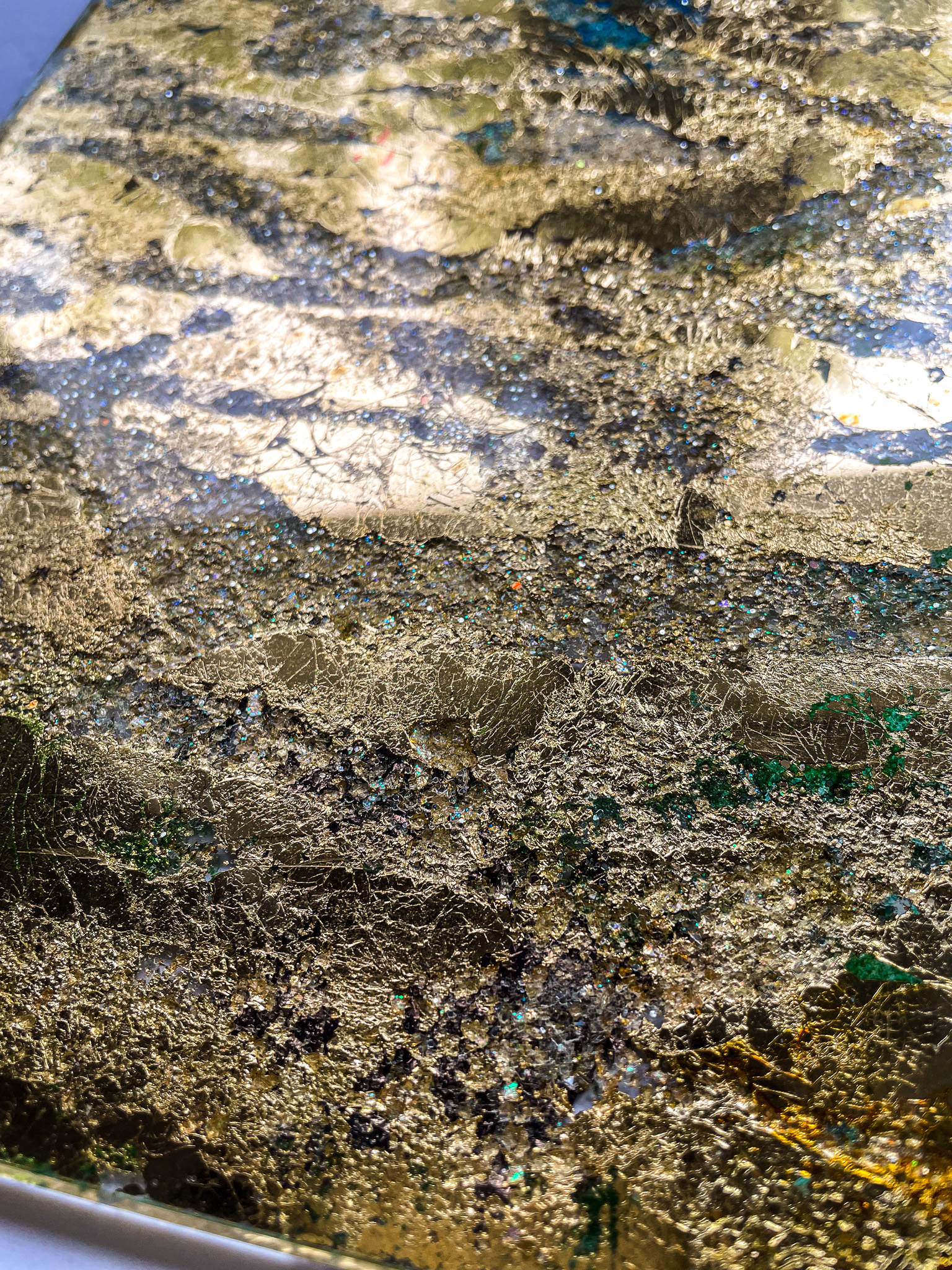
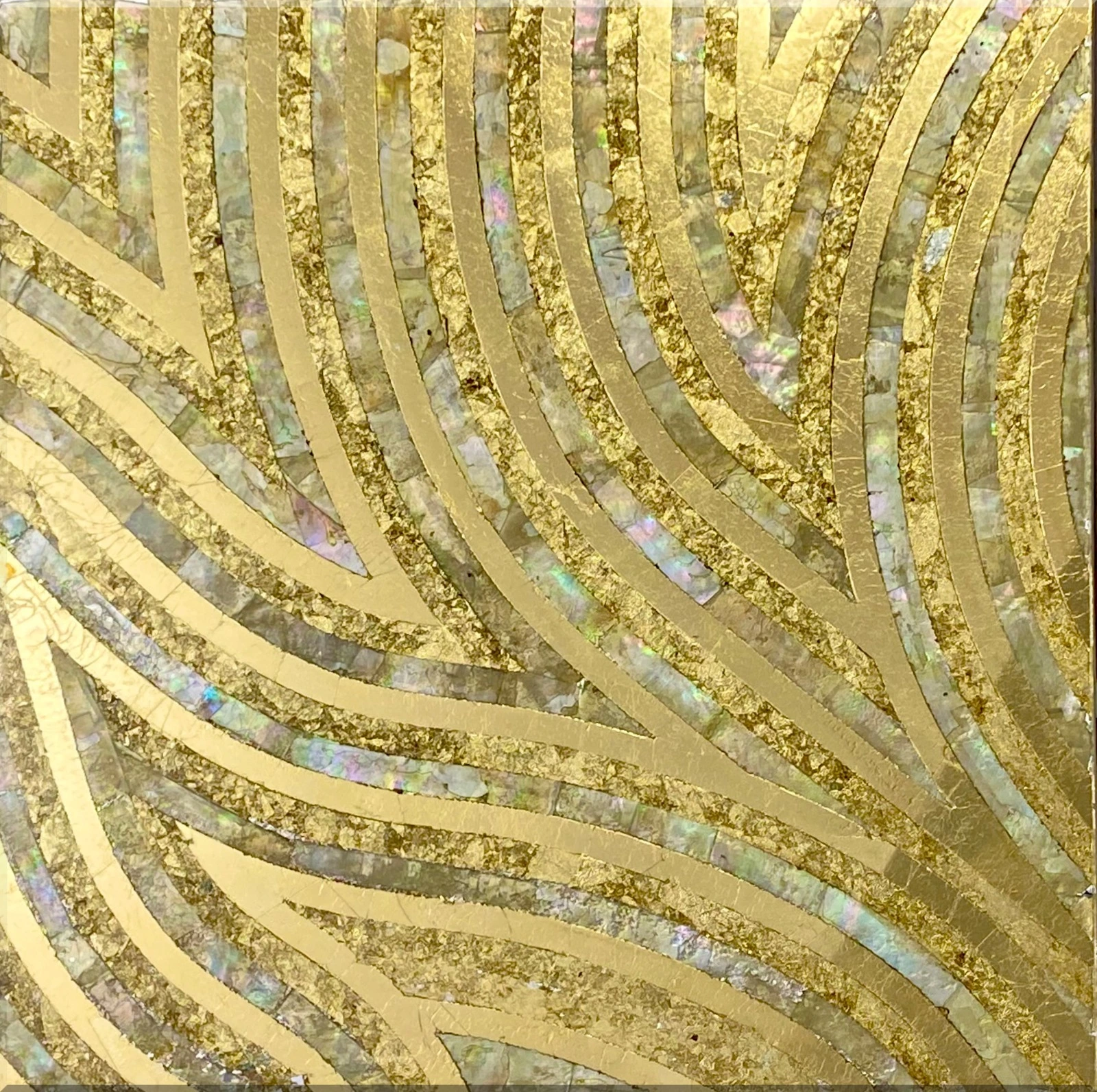
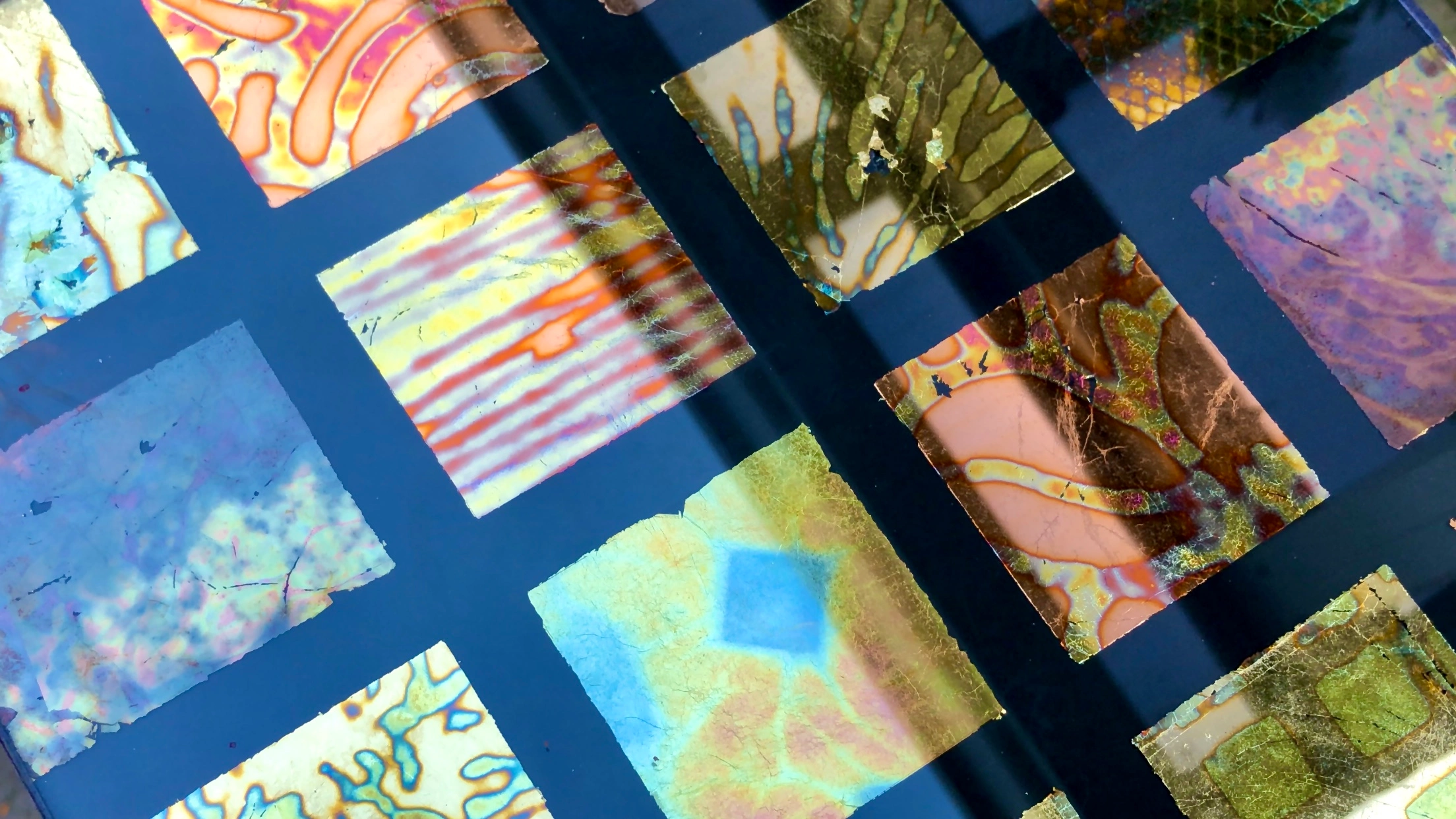
Gold leaf applied to the reverse of glass. What most definitions don't tell you: verre églomisé is not a static surface. The gold sits behind the glass — protected, untouchable — but it doesn't sit still. The finish shifts with the angle of view, the quality of light, the hour of the day. What you see in the morning is not what you see at night. What you see in a photograph is not what you see in person. This is a surface that responds.
The technique is the starting point
Traditional verre églomisé—gold leaf, gelatin size, reverse application—demands years of practice before the materials submit to consistent control. Gold leaf tears at a breath. Adhesive timing is measured in seconds. Humidity affects every layer. The glass surface holds no room for correction. Most practitioners dedicate careers to perfecting the established methods. This alone is mastery.
What distinguishes work at Marybeth's level is what emerges after two decades: the ability to manipulate surface qualities most gilders never attempt. Not because they choose traditional approaches—because pushing beyond them requires accumulated understanding that only thousands of panels teach.Which metal combinations create dimensional depth rather than flat reflection. Where to build texture and where restraint serves better. How to control the transition between mirror-bright and matte without losing the surface. This knowledge isn't documented in historical texts. It's earned through material dialogue—through failure, adjustment, observation, and the patience to let understanding accumulate across years.
Materials
We work with metals that behave differently in light and layer them in combinations that demand technical precision most gilders avoid.
23-Karat Gold Leaf
Warm, luminous. Holds light without harshness. Requires different handling than standard gilding metals—softer, more responsive to burnishing pressure, unforgiving of hesitation.
Palladium
Cool, reflective. Quieter than silver, more stable over time. Creates neutral passages that allow gold to read as warm rather than yellow. Rarely used in traditional verre églomisé due to application difficulty.
Mixed Metals
Gold against palladium. Warm against cool. The transition between metals becomes its own compositional element—visible in certain light, dissolved in others. Requires layering precision measured in microns.
Where it belongs
Verre églomisé belongs in spaces that ask for weight. Entry halls that set a tone before a word is spoken. Hospitality environments designed to be remembered rather than photographed. Private residences where every surface is considered—and most are rejected. The technique demands architectural commitment. A panel can't be moved once installed. The space and the work become permanent partners. The light in the room determines what the surface reveals. The viewing angles shape the experience. These are collaborations that require conviction. The rooms that deserve it tend to know.
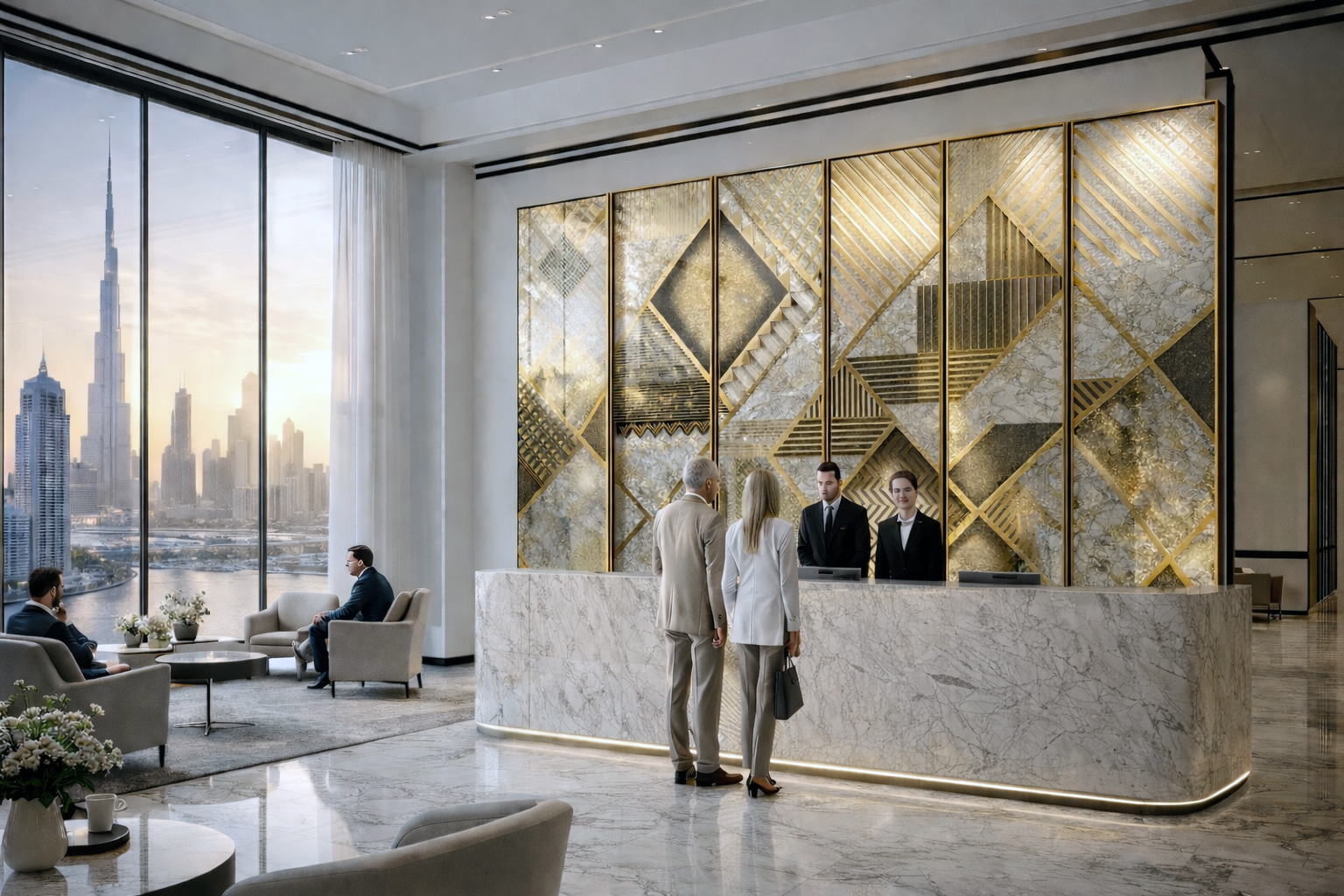
STRATA, concept for a six-panel installation at a hotel reception lobby.
What we've learned
Process and finish are inseparable. How you arrive shapes what you see—rushing the burnishing changes light reflection, layering metals incorrectly creates dead surfaces. The room matters more than the piece. Verre églomisé only reveals itself in architectural context, in relationship to space, light, and the bodies moving through. And no photograph captures what the surface does. This is work that demands presence. Techniques refined over centuries. Finishes developed here. A craft passed down. A practice still moving.